

You’re probably here because someone told you, “Just go to the BeltLine,” and that didn’t really answer anything. Is it a trail, a park, a transit project, or a neighborhood brand slapped onto half the city?
In Atlanta, it’s all of those at once. The beltline in atlanta can feel simple when you’re walking it and surprisingly complex when you try to explain why it matters. For newcomers, that mix is exactly what makes it hard to understand and worth learning.
What Is the Atlanta BeltLine Really
A normal Atlanta afternoon can change fast once the BeltLine enters the plan. You start with a walk, drift toward a market for lunch, pass a mural, cut through a park, and end up in a part of town you might never have visited by car. That’s the magic. The BeltLine changes how the city connects.
It’s not just a popular path. The Atlanta BeltLine is a 22-mile corridor built from former industrial railway lines and designed to combine trails, transit, and greenspace around central Atlanta. It also functions as a major redevelopment engine. According to WRI’s overview of the Atlanta BeltLine, the project has already attracted over $9 billion in private development along the corridor and is projected to create a total economic impact of $10 billion.
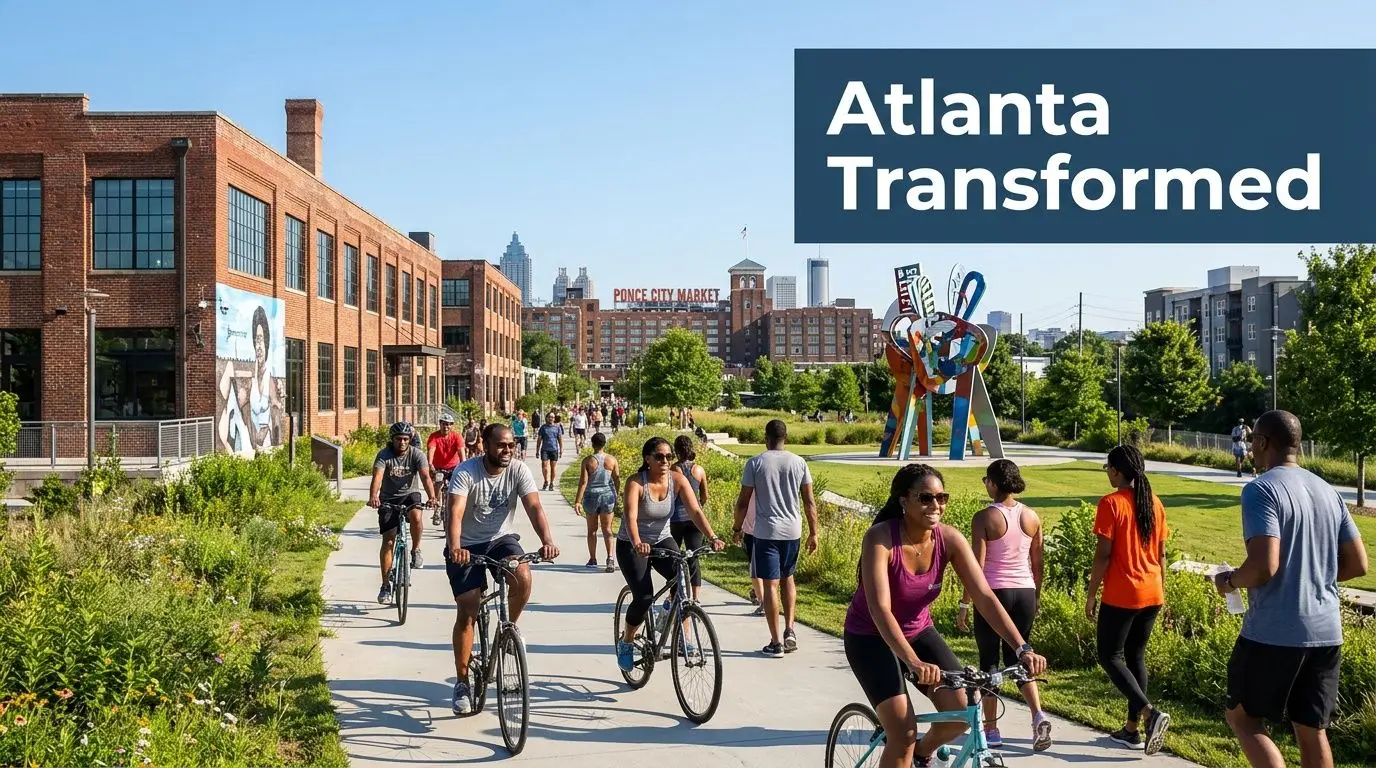
More than a walking trail
If you only visit the Eastside Trail on a busy weekend, you might assume the BeltLine is mainly a social corridor lined with food halls and patios. That’s one slice of it. The bigger picture is a city-scale project that ties together neighborhoods, parks, and future transit.
For a local business perspective on the corridor, see Atlanta BeltLine business logistics and recycling considerations.
The easiest way to understand the BeltLine is to think of it as Atlanta trying to reconnect itself using land that had been sitting quietly in the background for years.
From a Thesis to a Trail The BeltLine's Origin
The BeltLine didn’t begin as a tourism idea. It began as a city-shaping idea. The basic insight was that old rail corridors already formed a loop around intown Atlanta, and that loop could do more than move freight. It could connect neighborhoods that had long felt cut off from each other.
Why the idea mattered
Atlanta grew around roads, highways, and fragmented development patterns. That left many neighborhoods close in distance but disconnected in daily life. The BeltLine offered a different logic. Instead of asking everyone to move through the city by car, it proposed a network of public space and transit that people could use to move between communities.
That’s why the project has always carried more weight than a park expansion. It touches mobility, land use, public life, and neighborhood identity all at once.
The hopeful vision and the hard part
The ideal behind the BeltLine is easy to support. More access. More parks. Better links between neighborhoods. A public realm that feels shared instead of isolated.
But the story isn’t purely celebratory. Atlanta BeltLine’s overview of equity challenges notes that while the project was designed to reconnect fragmented neighborhoods and address historical divides, it has also contributed to green gentrification, displacing some long-term residents and raising ongoing questions about equitable growth.
That tension matters because it explains why locals sometimes talk about the BeltLine with pride and concern in the same breath.
Why newcomers often get confused
People hear “BeltLine” and think one thing. Residents often mean several things at once:
- The built trail network people walk, bike, and roll on today
- The larger redevelopment project shaping nearby land use and investment
- The long-term transit vision still unfolding across the corridor
- A debate about access and affordability that hasn’t gone away
A good local rule is this. Enjoy the BeltLine, but don’t mistake popularity for simplicity. It’s a public amenity and a live urban policy debate at the same time.
Navigating the Corridors A Trail for Every Mood
The full loop can sound abstract until you break it into pieces. That’s the best way to plan a visit. Different stretches feel like different cities.
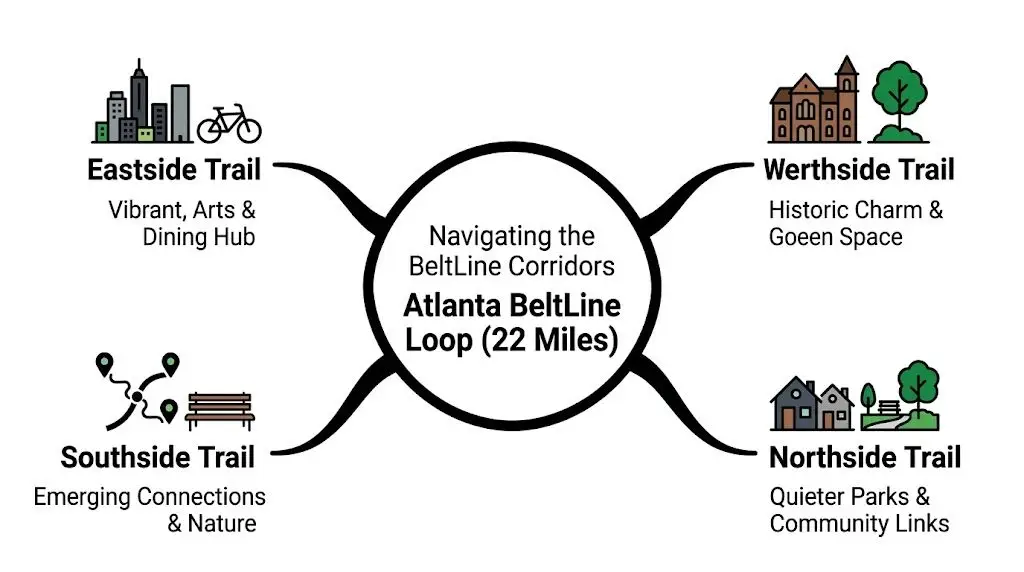
Eastside Trail
This is the section most first-time visitors know. It’s active, highly visible, and packed with destinations. If you want restaurants, people-watching, easy access to major landmarks, and the classic “I’m on the BeltLine” experience, start here.
It’s also the stretch where timing matters most. A quiet weekday morning feels very different from a weekend afternoon.
Westside Trail
The Westside has a different rhythm. It feels more spacious and more neighborhood-oriented, with a stronger sense of historic Atlanta around it. Some visitors prefer it because it’s less about being seen and more about moving through the city at a calmer pace.
If the Eastside feels polished and busy, the Westside often feels grounded and reflective.
Northside and Southside sections
These areas show the BeltLine as a work in progress. You can sense the larger ambition more clearly here because the network is still taking shape. For some people that’s less convenient. For others, it’s the most interesting part, because you can see Atlanta building its future in real time.
A useful local mindset is to treat the BeltLine less like one attraction and more like a set of connected experiences.
A current example of expansion
One of the clearest signs of forward movement is the Northeast Trail Segment 3 project. According to Atlanta BeltLine’s June 2025 design and construction update, this is a $42M project scheduled for Q1 2026 bidding with a 42-month construction timeline to mid-2028. The segment includes a 10-12 ft wide path, ADA-compliant grades, and security features such as LED lighting and IP cameras.
That level of detail helps explain something people often miss. These aren’t casual side paths. They’re engineered public corridors with standards for access, safety, and long-term use.
For a business-facing look at BeltLine access and corridor development, visit BeltLine Atlanta commercial service coverage.
How to choose your starting section
- For first-timers: Start on the Eastside if you want the most iconic experience.
- For a quieter walk: Try the Westside if you prefer room to move.
- For repeat visits: Explore developing sections to understand the project’s scale.
- For practical explorers: Check current construction conditions before choosing an entry point.
Planning Your Visit Access Parking and Transit
Your best visit usually starts with one decision. Are you arriving to wander, to exercise, or to reach a specific destination? That changes where you should enter, where you should park, and whether MARTA makes more sense than driving.
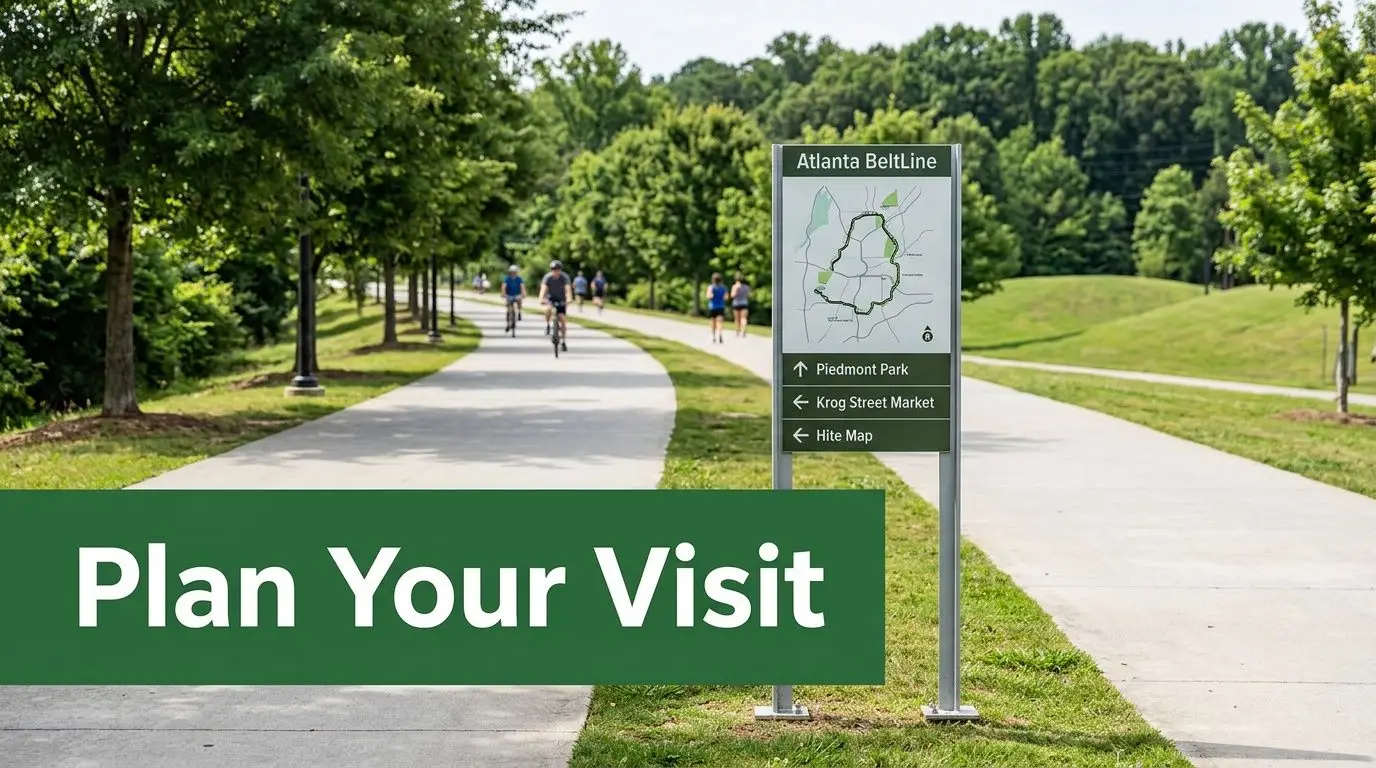
Getting on the trail without overthinking it
If you’re meeting friends near a market, restaurant cluster, or major park, choose your access point based on that destination rather than trying to “do the whole BeltLine.” It's often more enjoyable to pick one stretch and leave room to improvise.
Parking can be straightforward or annoying depending on time of day. In the busiest sections, especially around major attractions, demand rises quickly. MARTA often removes that stress and gives you a cleaner start.
For travelers navigating the city from major transportation hubs, Atlanta airport area logistics and access planning offers added context.
Bikes scooters and shared space
Bikes and scooters work well on the BeltLine, but the key is pace. Some sections feel almost like a moving plaza. Slow riding is often the courteous choice, even when the path ahead looks open.
Practical rule: Stay right, pass left, and assume someone nearby may stop suddenly for art, a dog, or a photo.
The future transit piece
The BeltLine isn’t only about trails. Its long-term mobility vision includes transit using Streetcar (SC) technology. According to Perkins&Will’s BeltLine corridor design overview, that future system is planned to operate at 15-25 mph with stops every quarter-to-half mile. The same source says this mode was chosen because it creates lower noise and vibration impacts than light rail or bus rapid transit in this setting.
That matters because it tells you how the corridor is supposed to function over time. Not as a scenic extra, but as part of Atlanta’s transportation network.
Discovering BeltLine Landmarks Parks and Art
Once you’re on the BeltLine, the landmarks don’t feel isolated. They unfold one after another. That’s one reason the corridor is so easy to enjoy even if you arrive without a strict plan.
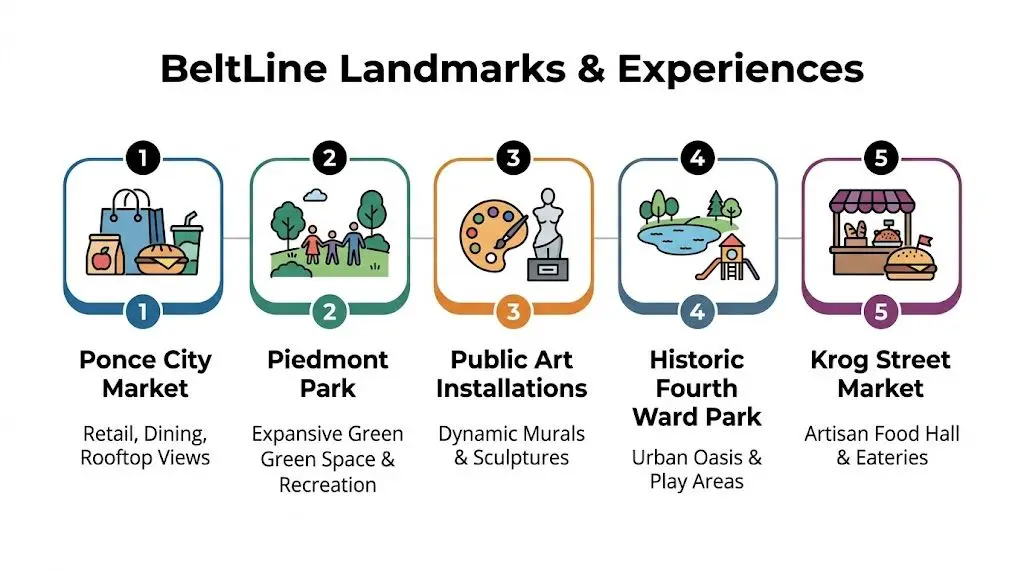
Ponce City Market and Krog Street Market
These are two of the best known anchors for first-time visitors. They give the BeltLine a strong sense of arrival because both connect food, retail, and social energy to the trail itself. If you want an easy outing with built-in options for eating and resting, either one works well.
They also help explain why people talk about the BeltLine as a lifestyle corridor instead of just a path.
Parks that change the pace
The BeltLine isn’t all storefronts and concrete. Green spaces along the route soften the experience and create room to pause. Piedmont Park and Historic Fourth Ward Park are especially useful if your group wants a mix of walking and downtime.
That mix matters for visitors with different goals. One person may want coffee and photos. Another may want shade and open lawn. The corridor supports both.
Public art and the feeling of discovery
The art is part of what keeps the BeltLine from feeling repetitive. Murals, sculpture, and temporary installations give each walk a small sense of surprise. Even regular users notice different details depending on light, season, and route.
If you’re planning a photo-heavy visit, don’t rush. Some of the best moments aren’t the famous landmarks. They’re the transitions between them.
A simple outing plan
- Start with food: Enter near a market if your group wants an easy meeting point.
- Add a park stop: Break up the walk so it feels relaxed, not like a forced march.
- Leave room for detours: Art, side streets, and nearby businesses are part of the experience.
- Go early if you want calm: The same stretch can feel completely different later in the day.
For another Atlanta landmark area with strong visitor overlap, see Atlanta Braves area insights and local connections.
The BeltLine's Economic and Community Impact
The visible change around the BeltLine isn’t your imagination. The corridor has helped reshape where people live, build, and invest inside the city.
What the population shift tells you
From 2010 to 2023, the half-mile BeltLine Planning Area added 24,000 residents, which equals a 25% population increase and outpaced the city’s 19% growth, according to Atlanta BeltLine’s population growth report. That’s a clear sign of densification around the corridor.
In plain language, more people want to live near it, and that preference has consequences. It changes retail demand, office patterns, development pressure, and daily logistics.
Why businesses pay attention
For commercial property owners, employers, and facility teams, the BeltLine creates opportunity and complication at the same time. Better-connected areas can draw customers and tenants. Construction activity, changing access patterns, and denser surroundings can also make operations more demanding.
That’s especially relevant for organizations moving offices, clearing storage, closing facilities, or upgrading IT equipment in fast-changing neighborhoods. Growth creates turnover, and turnover creates end-of-life asset decisions.
Growth near a major corridor doesn’t just change foot traffic. It changes loading schedules, vendor access, renovation cycles, and what businesses need from service partners.
The community question remains open
The BeltLine is often used as a model for urban revitalization, but it’s also a reminder that revitalization isn’t automatically equitable. Rising popularity can benefit a city while still putting pressure on long-time residents and small institutions.
For readers thinking about sustainability in a broader Georgia context, social impact recycling efforts in Georgia add another lens on growth, reuse, and community responsibility.
Safety Etiquette and Looking Ahead
The BeltLine works best when people treat it like shared civic space, not a private lane. Walk predictably. Keep your group from spreading across the full width of the path. If you’re biking, slow down where the trail is crowded. If you stop, move aside first.
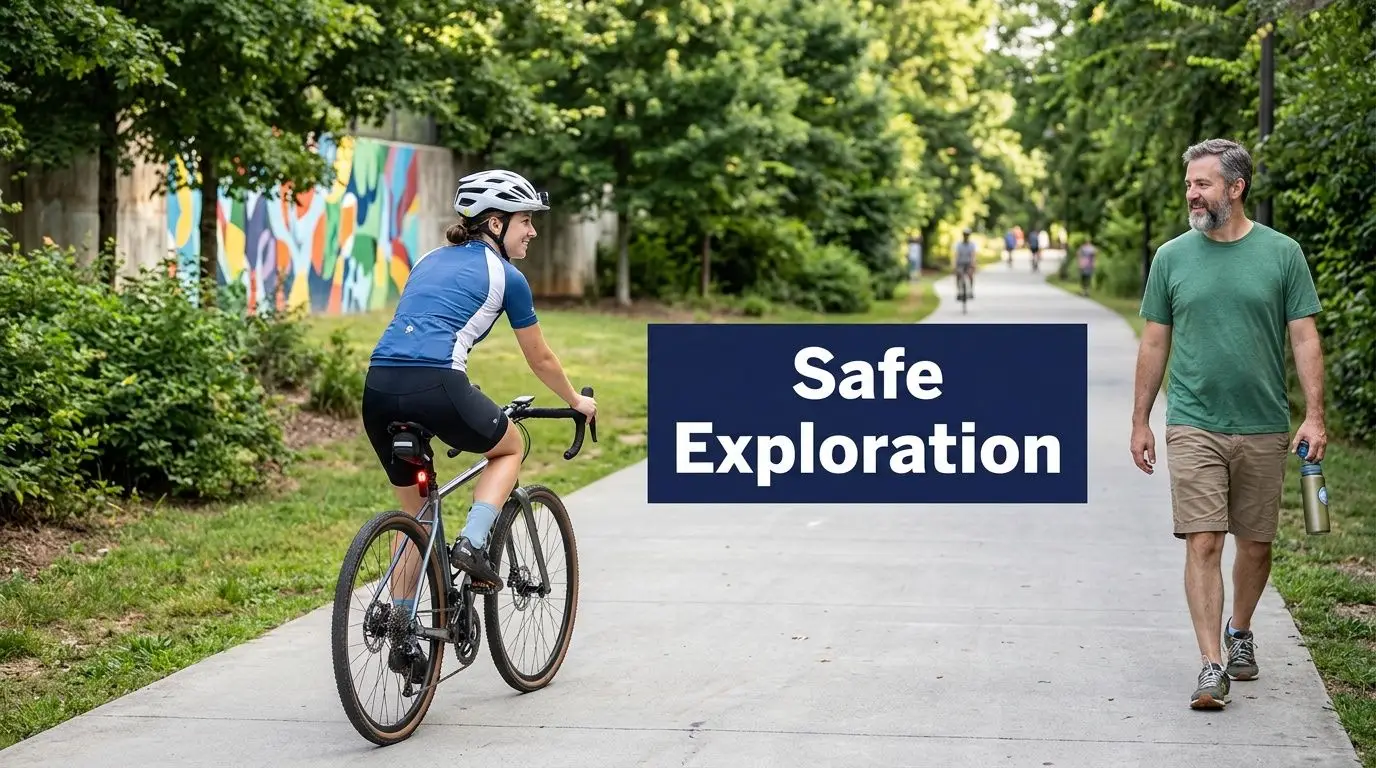
Accessibility matters here too. Some stretches are easier for strollers, wheelchairs, and slower-paced walkers than others, so checking your route ahead of time is worth it. Evening visits can be great, but it’s smart to stay aware of lighting, activity levels, and your exit plan.
The bigger reason to learn the etiquette is simple. The BeltLine feels good when lots of different people can use it comfortably at the same time. That atmosphere doesn’t happen by accident. Visitors create it together.
Atlanta still has more of the loop to complete, and that unfinished quality is part of the story. The BeltLine isn’t a frozen landmark. It’s an active project that keeps changing how people move through the city. If you’re new to town, the best way to understand it isn’t to overstudy it. Pick a section, go walk it, and let Atlanta introduce itself.
If your organization needs secure, compliant technology removal as Atlanta grows around the BeltLine, contact Beyond Surplus for certified electronics recycling, IT asset disposition, data destruction, product destruction, and data center decommissioning support.