
By the time someone sends the all-staff email about the office fridge cleanout, the damage is usually obvious. Containers have fused to shelves, unlabeled leftovers have become communal resentment, and nobody wants to touch the bottom drawer. In most offices, that mess gets treated as a nuisance instead of what it is: a facilities issue with health, operational, and compliance consequences.
A disciplined cleanout fixes more than odors. It reduces conflict, restores shared space, and gives facilities and IT teams a chance to catch items that don’t belong in the trash at all, including batteries, earbuds, and small smart devices. That last point gets missed constantly, and it matters.
Beyond the Mold Why a Fridge Cleanout Matters
A neglected breakroom fridge creates predictable problems. Food spoils, spills spread, containers leak into gaskets and drawer tracks, and people stop trusting the shared space. Once that happens, the fridge becomes harder to manage because employees either avoid it or treat it like nobody owns it.
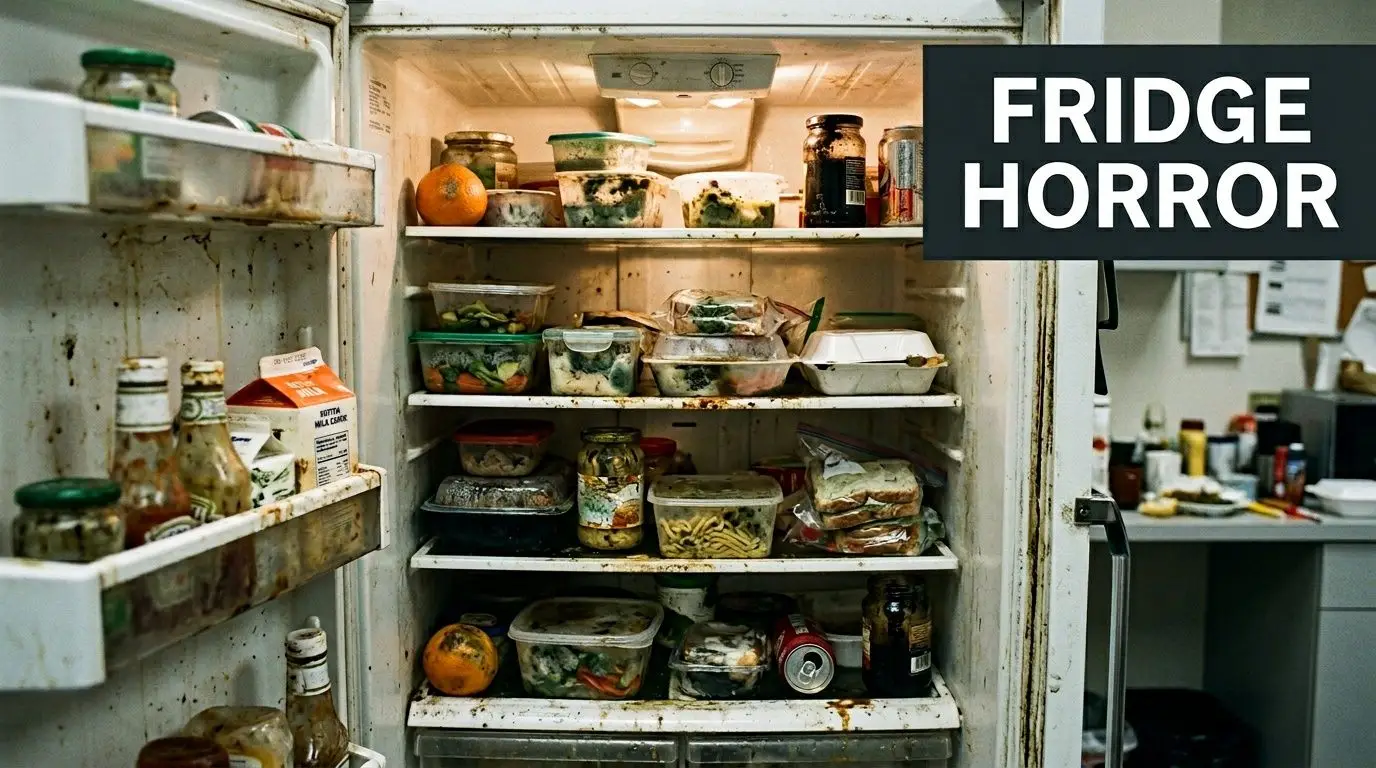
The health risk is the primary reason to take this seriously. University of Arizona research, summarized here, identifies the office refrigerator as the leading cause of workplace absenteeism from foodborne illnesses, with fridges averaging over 400 distinct bacteria types. In a shared appliance, one person’s bad storage habits become everyone’s exposure.
Shared fridges multiply small mistakes
Most office fridge problems start with ordinary behavior. A lid isn’t sealed. Raw ingredients drip. Somebody wipes a spill with a dry paper towel and calls it done. If you want a useful refresher on what cross-contamination is and how to prevent it, that overview maps closely to what goes wrong in communal kitchens.
Practical rule: If a fridge has mystery food, sticky shelves, and no ownership rules, it already has a management problem, not just a cleaning problem.
There’s also a less obvious business risk. Cleanouts often uncover non-food items tucked behind lunches or left in freezer compartments, especially batteries, wireless earbuds, charging accessories, or digital thermometers. Those items shouldn’t go into regular trash, and they definitely shouldn’t disappear without documentation in regulated workplaces.
For facilities teams handling larger space resets, the fridge is usually just one node in a broader turnover process. That’s why many companies fold it into a formal office cleanout workflow instead of treating it as a one-off chore.
Strategic Planning for a Seamless Cleanout
Most office fridge cleanout failures happen before the first glove goes on. The schedule is vague, nobody owns the process, and staff hear about it too late. Then the cleanup feels arbitrary, which is how you get complaints.
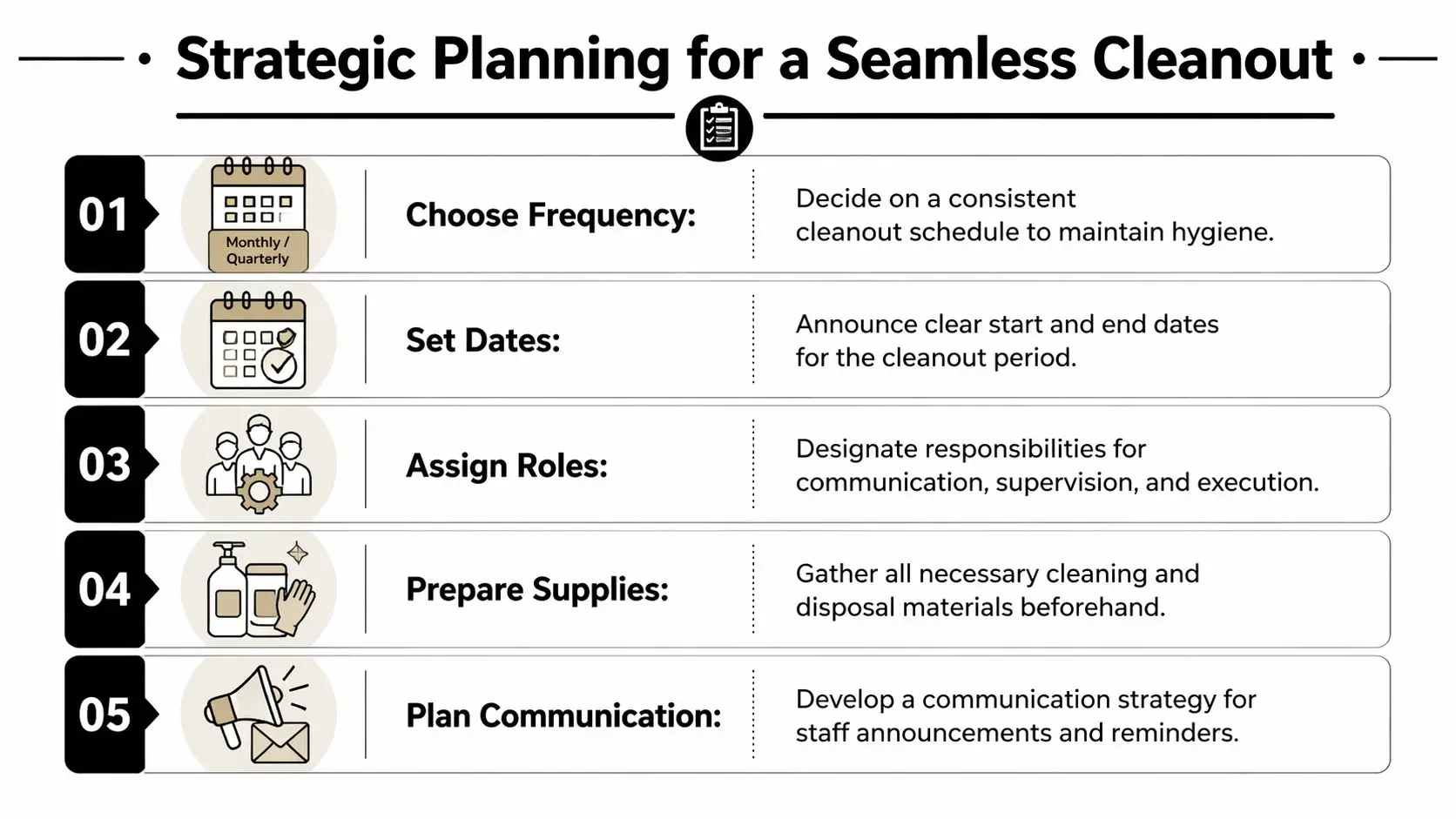
Abbey Cleaning’s guidance is useful because it matches what works in real offices: minimum 1-2 weeks advance notification and a consistent schedule, with Friday afternoon 4 PM cutoffs helping prevent food from sitting through the weekend. Ad hoc cleanups don’t build compliance. Repetition does.
Pick a cadence and stick to it
Weekly purges and monthly deep cleans work better than occasional mass cleanouts. The weekly pass keeps the fridge usable. The monthly pass fixes the buildup hidden under bins, inside tracks, and along seals.
Use a simple ownership model:
- Facilities lead: sets dates, approves supplies, and handles disputes.
- Site contact or office manager: sends notices and posts signage.
- Cleaning staff or assigned team: executes the purge and deep clean.
- IT or compliance contact: receives any electronics or batteries found during sorting.
Treat it like a mini project
A cleanout should have a defined start, cutoff, and closeout. If you have multiple floors or breakrooms, stagger them so staff still have access to refrigeration elsewhere.
A workable sequence looks like this:
- Set the date and keep it recurring.
- Announce the cutoff with exact day and time.
- Post fridge signage in plain language.
- Stage supplies the day before.
- Document exceptions, such as catering leftovers or labeled team items.
- Assign one decision-maker on cleanout day.
When responsibility is shared by everyone, accountability belongs to no one.
If the cleanout is tied to a move, renovation, or department reset, it helps to fold fridge disposal, pantry cleanup, and stray device handling into one coordinated office cleanout services plan.
Crafting Clear and Effective Staff Communications
You don’t need clever messaging. You need messaging nobody can misunderstand. The best notices are short, dated, and consistent across email, chat, and paper signage on the fridge door.
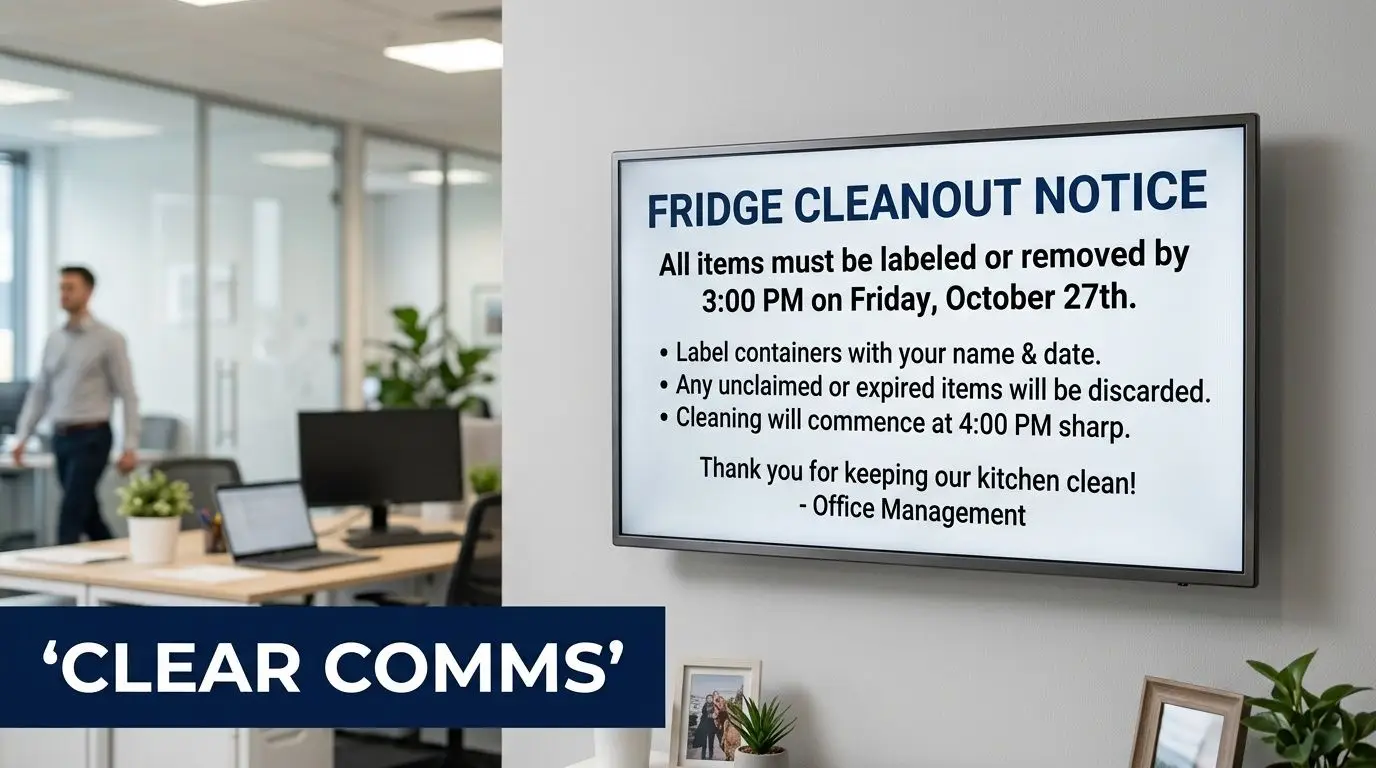
Initial announcement email
Subject: Office fridge cleanout scheduled for Friday at 4 PM
Team,
We’ll clean out the breakroom refrigerator on Friday at 4 PM. Please remove any personal items you want to keep before that time. Any unlabeled, expired, or abandoned items remaining after the cutoff will be discarded. Please label containers with your name and date going forward.
Reminder message
Send this the day before:
- Repeat the deadline: Friday at 4 PM.
- State the rule clearly: remaining items may be discarded.
- Mention labeling: name and date on all items.
- Flag special items: contact facilities if something is being saved for an event.
Fridge door sign
Keep the paper sign even shorter than the email.
Refrigerator cleanout Friday at 4 PM. Remove personal items before cutoff. Unlabeled, expired, or abandoned items left inside may be discarded.
The tone matters. Firm is fine. Passive-aggressive isn’t. If staff think the process is punitive, they’ll fight it. If they see that the rules are stable and evenly applied, most offices fall into line quickly.
One practical addition is a note about non-food finds. Ask employees not to leave batteries, earbuds, or small electronics in breakroom areas and direct them to the company’s proper disposal channel. For teams that already run periodic collection drives, that message can align with an e-waste collection event process.
The Ultimate Office Fridge Cleanout Toolkit
Bad cleanouts usually come down to missing supplies. Teams start with disinfecting wipes and trash bags, then realize they have no scraper, no labels, and nowhere to place questionable non-food items.
Build the kit before the day starts.
Cleaning and sanitation basics
- Disposable gloves: enough for everyone touching contents or removable parts.
- Trash bags: one stream for food waste, another for general non-food trash.
- Microfiber cloths and paper towels: microfiber for wiping, paper towels for heavy residue.
- Warm soapy water setup: buckets or access to a nearby sink.
- Food-safe disinfectant wipes or spray: for final wipe-downs.
- Plastic scraper: safer than metal on shelves and liners.
Control and organization items
- Masking tape and permanent markers: for names, dates, and temporary sorting labels.
- Plastic bins or trays: to hold approved items during cleaning.
- A printed checklist: keeps the team from forgetting gaskets, handles, or drip areas.
- A dedicated small electronics container: clearly marked for batteries, earbuds, or devices that turn up unexpectedly.
That last container is worth planning for. Fridge cleanouts regularly surface things that belong in a proper recycling stream, not a cafeteria trash bag. If you need a reference for what commonly belongs in that stream, a general office recycling accepted items guide helps teams separate ordinary waste from electronics.
The Deep Sanitation and Organization Process
A proper office fridge cleanout isn’t a quick spray-and-wipe. This deep-cleaning reference notes that a true deep clean requires 2-3 hours and complete component disassembly, including removing shelves and drawers for individual washing. That matches field reality. Weekly wipe-downs help, but they don’t reach the grime under crispers, inside tracks, or around blocked drainage points.
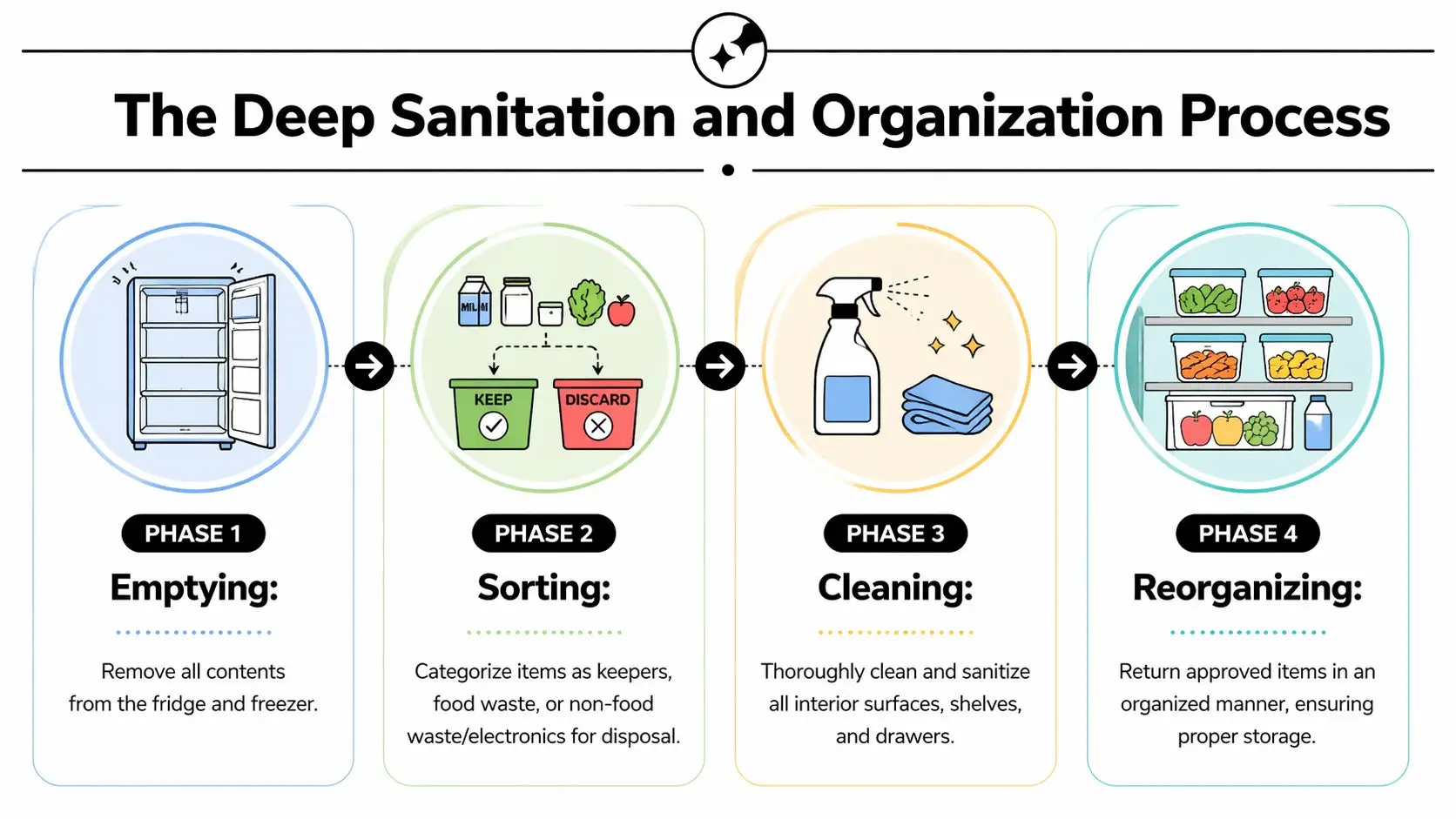
Empty and sort first
Don’t clean around food. Empty the unit fully, then sort into three groups:
- Keep: clearly labeled, in-date, intact items approved to go back.
- Discard: expired, leaking, moldy, or abandoned food.
- Non-food items: reusable containers, utensils, batteries, earbuds, and anything electronic.
This sorting step prevents one common mistake. Teams often start scrubbing while half the contents are still inside, which slows the job and leaves contaminated areas untouched.
Disassemble and wash removable parts
Take out shelves, drawers, and bins. Wash them individually in warm soapy water and dry them before reinstalling. For stuck-on residue, a baking soda soak can loosen it without damaging plastic.
If you want a consumer-friendly cleaning reference for vinegar-based surface work, this quick guide to a sparkling fridge is helpful for technique, especially on interior surfaces. In office settings, keep products food-safe and avoid strong scents that linger in shared spaces.
Deep cleaning fails when teams only wipe what they can see at standing height.
Hit the missed areas
These are the parts that usually get skipped:
- Door gaskets: wipe folds and seams where residue collects.
- Drawer channels: sticky tracks attract debris and mold.
- Drainage areas: inspect for blockage if moisture is pooling.
- Handles and exterior touchpoints: high-contact surfaces need disinfection.
- Condenser area if accessible: dust buildup hurts cooling performance, so follow the unit’s maintenance guidance.
Reorganize only after the fridge is dry. Return approved items neatly, leave space for airflow, and put markers and labels nearby so the system survives past the next lunch rush.
Managing Waste from Food to Forgotten Electronics
While knowing how to throw away spoiled yogurt is widespread, developing a plan for the odd items sitting behind it often isn't.
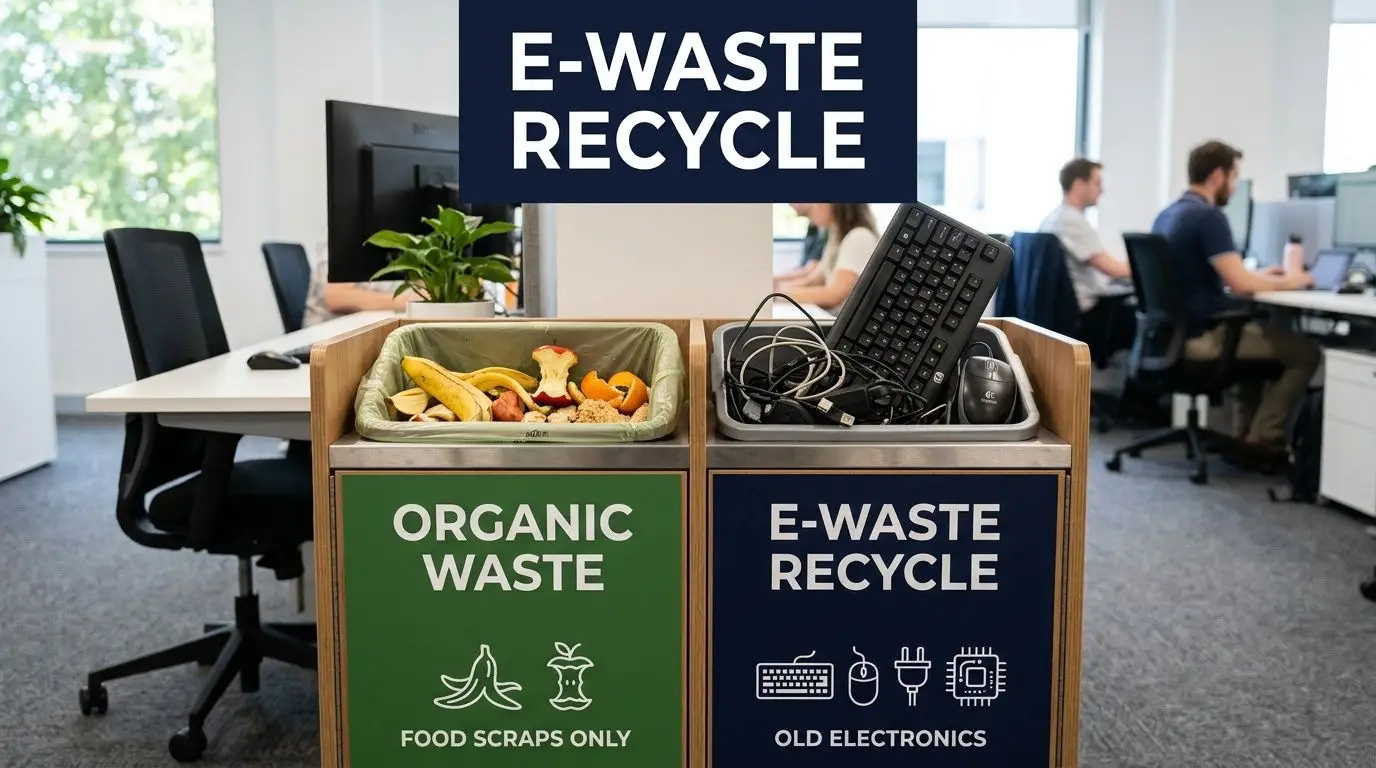
Food waste should be bagged quickly, sealed, and removed from the workspace so odors don’t return while the team is still cleaning. Recyclable packaging only belongs in recycling if it’s empty and clean enough for your local program. Anything leaking or contaminated usually belongs in trash.
The overlooked risk sits in the back corner
The unusual finds are where the business risk starts. A 2025 EPA-related discussion summarized here notes that 20% of office e-waste includes improperly discarded small electronics, and it specifically calls out the hazard posed by items like batteries and small devices under rules such as the FTC Disposal Rule. In practice, that means a fridge cleanout can become an e-waste handling event without warning.
Examples include:
- Wireless earbuds left in lunch bags
- Batteries dropped into side shelves
- Digital thermometers from wellness or kitchen use
- Charging accessories or smart mug components mixed into drawer clutter
Don’t toss those items into regular waste. Isolate them, document what was found if your site requires it, and route them into a compliant electronics stream. For organizations with regulated data or formal sustainability policies, that handoff belongs in a documented office cleanout and IT equipment disposal process.
Maintaining a Clean and Compliant Office Fridge
A clean fridge stays clean when the rules are visible and enforced the same way every time. That matters because neglect is common. A 2018 survey reported here found that 1 in 4 people have not cleaned their refrigerator in 6 months or longer. In a workplace, shared habits don’t improve on their own.
Post a short rules sheet near the fridge:
- Label every item with name and date.
- Clean spills immediately instead of leaving them for the next person.
- Use sealed containers for anything with odor or liquid.
- Respect cutoffs for weekly purge and monthly deep clean.
- Don’t leave electronics or batteries in breakroom storage areas.
A reliable office fridge cleanout routine protects shared space, reduces friction, and keeps small problems from becoming facilities headaches with compliance implications.
If your team needs help beyond breakroom cleanup, contact Beyond Surplus for certified electronics recycling and secure IT asset disposal. They help organizations manage e-waste, data-bearing devices, and office cleanout material with documented handling that supports security, compliance, and responsible recycling.